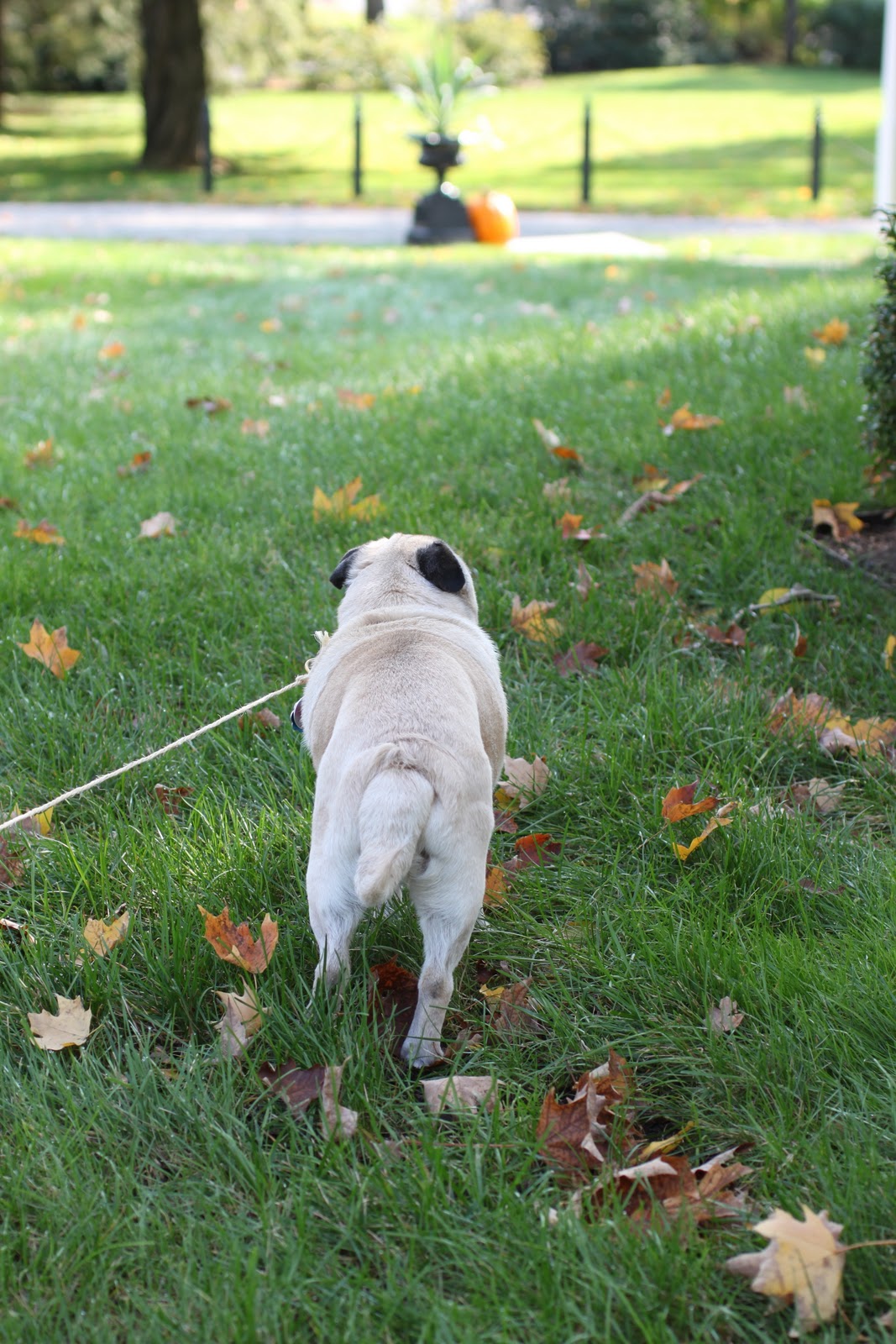
Tuesday, November 9, 2010

An Autumn Black-Tie Dinner at Darlington House, Part I: Planning the Party

This is the first of a two-part series that I am writing on what it takes to throw a  formal dinner party at Darlington House.  I am sharing it with you, Dear Reader, because I thought you might be interested to learn how we plan for such events, and what it requires to successfully carry off such a party--at least the way that we do them.  I hope you enjoy it.


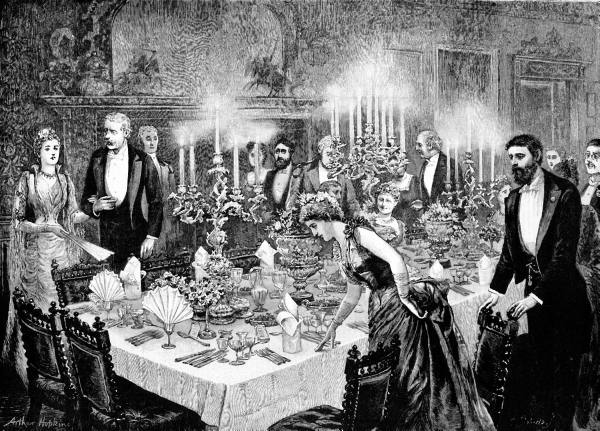
It’s that time of year again, when we resume throwing formal dinner parties at Darlington House.  During warm weather we usually concentrate our entertaining on informal, intimate gatherings, often on our screened porch, either dinner for four or six, or maybe a dozen for cocktails.  But when the weather turns cool our sights move indoors, and we start to plan dinner and cocktail parties for more guests.  We also ratchet up the formality of our gatherings.

A typical formal dinner party at Darlington House


We didn't do a lot of entertaining this summer.  Not only were we were away a lot, but when we were at Darlington we mostly wanted to keep our time there low key, letting off steam from the busy week.  Ideally that meant at least one or two weekends a month when it was just the two of us for dinner on a Saturday night, the big entertaining evening in the county--at least among those of us with weekend houses there.

Ah, the glamorous life on the benefit circuit . . .

Another reason we didn’t entertain much this summer was that there were a lot of benefit parties to go to, since summer is the season when the county cranks up the frequency of parties supporting worthy causes.  And this summer there seemed to be dueling benefit cocktail and dinner parties almost every weekend where friends were on the committees, so we had to make an appearance from time to time.  Although Reggie enjoys getting out and about, several weekends in a row of benefit dinners is enough to make anyone want to stay home on a Saturday night, Reggie included.
Switching one's place card is frowned upon at Darlington House


I’m pleased, though, to report that this summer we actually got invited to a large, private cocktail garden party, thrown by one of the blogosphere’s most prolific lifestyle mavens.  And it was fun!  It was so nice to finally be invited to someone’s bash--and believe me this was a real bash--where we weren’t expected to write a check for the privilege of attending it . . . for a change.  I’d begun to wonder, does anyone throw big private parties any more?

It is generally accepted among polite society that
everyone looks better when dressed for dinner


Anyway, getting back to the subject at hand, back in September Boy invited his closest friend from college, Jasper Lambert, and his girlfriend, Francesca Montmore, to spend the weekend with us at Darlington House later this month.  Boy and I agreed that we should throw a dinner party in their honor during their visit, and that we would ask our guests to dress for the dinner, in black tie.  Not only did we want to celebrate the visit of our dear friends, but we coincidentally owed a number of other couples that had entertained us beautifully return invites (see Reggie’s Rules for Social Reciprocity, Parts I and II), and who we thought would be delightful additions to the party.  Fortunately they were free to join us.

Uh-oh, time to go home!


But Reggie notes that large, formal dinner parties don’t just happen: it takes effort to make such parties appear effortless.  Successful ones take a lot of planning, organization, and work to pull off.  And not just by the hosts, either, but also by the service providers that help make such things happen seamlessly.  For starters that includes our housekeeper, Karyn, and our all-around handyman, Rich, who are responsible for getting Darlington House looking its absolute best for such an event--it takes lots of tending and polishing to set the place a-gleaming.  And then, of course, there is the collaboration with and planning of every detail of the menu, presentation, and staffing with our most-beloved caterers, who were--much to our relief--able and willing to again take on such a commitment for us.

"Say, what wine can you recommend
to serve with
fois gras?"

As far as the setup goes, we've already selected which table cloth and napkins to use, and what china and silver we shall set the table with.  Boy has already bought the candles (we will light over forty of them that night).  We still need to choose the wines we will serve, and we'll need to pick up the chocolates and sweet meats for the table, for after dinner.  The day before the party Boy and I will make an early morning trip to the flower district in Manhattan to buy the flowers that Boy will then arrange the day of the party.


Some people might ask, "Reggie, I understand that you enjoy throwing parties, but why are you requiring your male guests to dress up in black tie, and the ladies to don dresses?  Isn't it an inconvenient bother for them?  What if your guests haven't got the necessary clothes?"  To which Reggie answers: "No, it is no bother at all!  I and my friends enjoy dressing for dinner.  Because, Dear Reader, Reggie and his friends are grown-ups, and we like dressing like adults.  Dressing for dinner makes the evening more festive and elegant."  Besides, most of the people Reggie knows already own suitable clothes for such an evening.  It is simply a matter of pulling them out and putting them on.

A well-run party requires a sufficient number of staff


I can assure you that Darlington will be a frenzy of activity leading up to the party, reaching a crescendo several hours beforehand when the caterer and the serving staff arrive.  Reggie slips away from the hubbub an hour or so before our guests are asked to arrive, in order to bathe and dress unhurriedly before the party.   He allows himself one drink while dressing.

Reggie recommends having a dozen white waiters jackets
on hand in different sizes for your servers to wear,

as we do at Darlington House

As I've written before, we enjoy the planning and execution of throwing a party and consider it to be good fun.  Reggie relishes the preparations for a swell party, all of which pleasantly culminate in the delightful feeling of satisfaction, pleasure, and anticipation he has when standing at Darlington House’s door, elegantly dressed and with a drink in his hand, waiting to greet his guests as they arrive for what will—he knows—be a lovely and memorable evening, indeed.


Next: Part II: The Countdown, in which I recount the day-by-day planning and preparations required to throw our party.


Images from the following sources: Getty Images, Corbis Images, Zazzle.com, LIFE Archive, William Hamilton's "Anti-Social Register"

Tuesday, November 2, 2010

Winning Bid: American Fancy Chairs II

Reggie seems to be having a bit of a problem with Blogger at the moment.  He just posted a new essay this morning titled Winning Bid: American Fancy Chairs that Blogger is insisting that I already posted on October 11th, and has therefore buried it back in October's postings.

One of a pair of New York fancy chairs, ca. 1815-1820
that we recently acquired for Darlington House

If you would like to read the essay, and Reggie encourages you to do so (otherwise, why would I have written it?), please click on the link to it above.

Thank you,
Reggie

Saturday, October 30, 2010

The Urns of Darlington: Autumn

This is the final installment of The Urns of Darlington series, in which I show you, Dear Reader, the seasonal rotation of plantings in the large cast-iron urns at Darlington House.  I acknowledge that some of you may find it will be the least interesting installment of the series, since these are the urns upon which the least effort was expended.  And, on one level, you would be right.  But Reggie finds these urns to be the most satisfying of the series.  For these are the simplest.  Simplicity is a quality that Reggie greatly values, given how elusive he finds it to be in much of the man-made world, where the propensity is to not leave well enough alone.

A massive chrysanthemum in our largest urn

Reggie is proud to say that he adores chrysanthemums.  And he is happy to decorate his property during the autumn with ones from his local garden supply store, an Agway that sits but a little less than a mile from Darlington House.  Reggie says he is "proud" because there are certain circles that consider chrysanthemums beneath contempt, and horridly common.  MD's generation was taught to loathe chrysanthemums, vulgarly known as "mums."  That's because their mothers' generation adored them and, to be frank, over-used them in table arrangements.  Another strike against them was that florists over-relied on them (along with daisies and baby's breath) when creating those awful, long-lived FTD-type arrangements that uglified many a table in this country for far too long, and which Reggie understands are still to be seen in certain benighted households even to this day.


But Reggie adores chrysanthemums, and believes they are a worthy adornment to any household when chosen carefully and used contextually.  He doesn't care at all for the over-hybridized ones seen in many garden centers today, found in garish and unnatural colors such as fuchsia, mauve, or acid yellow.  Actually, he abhores those.  No, he approves only of ones in autumnal hues of rust, deep crimson, and gold.  Those, he believes, are the only appropriate colors for chrysanthemums, at least out of doors, and are the only colors you will ever find filling urns at Darlington House.


"Wait a minute, Reggie," you might cry in looking at the above photograph, "you haven't done anything to that urn in front of the door at Darlington House!  That's the same grass that was in it in your summer installment of the series!"  And you would be correct, Dear Reader, it is the same grass.  We haven't changed it out this year because we like the way the grass looks far too much to rip it out.  And, besides, it looks appropriately autumnal, in our view.


Rather than replant the urns in front of the door to the house, we decided to decorate the marble step at the door with these marvelous, generously scaled pumpkins grown at Holmquest Farms, in nearby Hudson, New York.  They are quite handsome, don't you think?


Just as we did at the door to Darlington House so we did at the base of the large urn that sits at the end of the walkway leading up to the house: we placed a large pumpkin next to it.  And yes, you are correct: that is the same handsome Mexican Lilly in the urn that we planted there this summer.  

Beauty is simplicity.

And so this draws to a close the four seasons of the Urns of Darlington House.  We are off today to Massachusetts to buy the evergreen shrubs that we will soon plant in the urns for winter, starting the cycle once again.

All photos by Boy Fenwick

Sunday, October 24, 2010

The Apples of New York

One of the glories of New York State is its apples.  The Hudson River Valley is blanketed with apple orchards, including many of the "pick your own" variety.  We have one near us at Darlington House, Philip Orchards, that we visit at least several times each autumn to load up on its delicious pears and apples.  Philip Orchards is owned and operated by Mrs. J. Van Ness Philip, whose family has owned the property on which the orchards stand since the 1700s.

Apples, gourds, and squash on the kitchen table
 at Darlington House

We enjoy filling large antique bowls with apples from Philip Orchards at Darlington, and we place them about the house where they fill the rooms with their sweet and heady fragrance.  We eat as many of these apples as we can, but we are never able to consume all that we pick.  Once they start to turn, as they inevitably do, we throw them in the fields at the back of our property, where animals that live in the area feed upon them.  They don't go to waste.

The Apples of New York -- the definitive textbook on the subject

We also bring baskets and bags full of apples back to the city at weekend's end.  We share them with the staff in our city apartment building, and we also bring apples in to our offices to share with the people we work with.

Apples are not native to New York, but were introduced by Europeans when they settled there almost four hundred years ago.  There are over 700 known varieties that have been cultivated over the years.  With the ascendency of the local food movement, many of the old-fashioned, or "heirloom", varieties that had not yet become extinct have been reintroduced to the apple-eating public, often in farmers' markets.

The Apples of New York is beautifully illustrated with color plates 
(Mrs. Blandings take note of the name of this apple!)

One of the great textbooks on the fruit that Eve tempted Adam with is The Apples of New York, a two-volume, profusely illustrated encyclopædia of apples published in 1903 by the State of New York Department of Agriculture.  We are fortunate to own a set here at Darlington House that we bought at a charity auction several years ago.  It takes pride of place in our horticulture library, where it is joined by--among other books on topics of interest to gardeners--other early twentieth-century horticultural encyclopædia published by the State of New York, including The Plums of New York, The Cherries of New York, and The Wild Flowers of New York.

A gorgeous red Macoun picked at Philip Orchards

Did you know that it was not until the twentieth century that apples were primarily grown in America to be consumed as food, rather than for their juice?  Until Prohibition, most of the apple production in this country was dedicated to the making of cider, much of it fermented as alcohol.  It was not until after Prohibition was repealed that beer surpassed cider as the alcoholic beverage of choice for many working Americans.

A New York state apple orchard, circa 1900, as depicted in The Apples of New York

Many apple growers were bankrupted during Prohibition, and it was during that misguided period of supposed temperance in this country that the jingle "An apple a day keeps the doctor away" was coined to promote the consumption of the noble fruit.

A Red Delicious--no wonder this is America's favorite apple

When Reggie was a boy his parents owned a country house in rural Maryland, where his family went most weekends.  It was a working farm, with much of the land planted with fruit trees by prior owners, covered with apple, peach, and cherry trees.

A color plate from The Apples of New York

The farm was spectacular in the spring, when the trees were covered with blossoms, and it was magnificent in the summer and autumn, too, when the trees were covered with fruit.  My parents let the property to a local farmer who harvested and sold the fruit.  One of Reggie's joys as a boy was exploring the farm's cavernous stone root barns, where the farmer stored apples over the winter in large wooden crates, stacked to the ceiling.  The scent of the apples was almost overpowering and is a great sense memory of mine, much like Proust's madeleines.

A pretty Jona Gold, sitting on our New York server 
at Darlington House

My parents sold our farm in the early 1970s to a man who then sold it to a developer in the early 1980s.  It has since been turned in to a "town home" development of luxury properties for commuters to suburban Washington, D.C., office parks.  What a far cry it is today from the plain farm that I knew and loved as a boy.

Another plate from The Apples of New York

Living in the Hudson River Valley as I do today, I appreciate the fragility of the farming culture in areas where economics have shifted to favor development over agriculture.  I respect and value the men and women who farm these lands and who choose to do so in the face of great obstacles, when it must be tempting, indeed, to sell out to weekenders from Manhattan or commuters to Albany.

And yet one more plate from The Apples of New York

I cherish the farms here in New York, and I feel it is my obligation to support them with my patronage.  But that is easy for me, since what they produce is so wonderful.  Not only do I enjoy consuming their bounty, I like giving gifts of it.

Only last weekend Boy and I gave some apples to my friend and fellow blogger Lindaraxa, who was visiting New York and invited us to a dinner that she cooked.  It was held in the apartment of her friend Sylvia, with whom she was staying during her visit.  Lindaraxa made a divine Bolognese lasagna and served it with a simple green salad, followed by a delicious autumn apple crisp.  Heaven.  If you are not familiar with her blog Lindaraxa's Garden, I encourage you to visit it.  It is a repository of marvelous recipes for mouth-watering food (including most recently the lasagna she served Reggie), and is beautifully written and presented.

A sweet basket of apples for a friend

We brought Lindaraxa this pretty little bushel of apples from Philip Orchards when we joined her for dinner.  Boy picked the apples only the previous day, and he tied it with a lovely crimson satin ribbon.   It couldn't have been a more simple or more beautiful gift.  And our friend Lindaraxa loved it.

All photographs by Boy Fenwick

Thursday, October 21, 2010

Pompey: Fit To Be Tied

Pompey requires monitoring when he goes outside.  That's because he is a wanderer.  Not always, but most of the time, when given the chance.  He is a curious and sociable little fellow, and he enjoys snooping around, seeing what's what.  And sometimes that means that, if one is not careful, one can find that Pompey has wandered off, nowhere to be found.  That's okay when we're in the house, since he can't get outside, but it can be nerve-racking when we are outside the house, since we live on a busy road.

Pompey, on the kitchen step at Darlington House, tethered to Reggie

Not long ago I woke up early one balmy, sunny morning and came downstairs with Pompey.  After attending to his needs, I opened the kitchen door to let in the morning's air and let him stroll outside where he plopped down to take a sun bath, something he enjoys doing.  I then sat at the kitchen table, opened my laptop, and started working on RD.  Before I knew it, fifteen or so minutes had gone by without my looking up to monitor what my darling little pug was up to.  At that point Boy appeared and asked me where Pompey was.  I gestured outside, with a wave of my hand, absorbed in working on my post.

"What, are you mad?" Boy asked. "He's probably gone off somewhere!"

Sitting for a moment, while tethered to a hitching post

And, much to my consternation, indeed he had.  Despite our calling out his name and shouting bribes of treats and biscuits should he return (which usually produce satisfactory results), my dear little pug was nowhere to be found.  As we fruitlessly searched Darlington and the neighboring properties for him, my anxiety gave way to terror as the minutes passed, and I vowed (not for the first time, I might add) that I would never, ever let him out of the house again unsupervised, if only, dear God, I would find him soon, safe and sound.

Boredom sets in

Fifteen bootless minutes later, as I careened into the depths of despair at the prospect of never seeing my little fellow again, at least alive and in one piece, I was relieved and then overjoyed to learn that Boy had found him, blithely wandering through the back yard of one of our neighbors, oblivious to the hysteria his absence had produced.

Pompey, knotted with twine to a horse weight

After living through that harrowing experience, which I have no interest in repeating, I decided that I would only allow Pompey outside with me again when he was on a leash, or at least closely supervised, where I would be assured of keeping him in my sights at all times.

What's over there?

Over Columbus Day weekend we decided that we would explore various options available to us to benignly restrain Pompey's wandering impulse when we let him outside the house, unsupervised.  We long ago gave up putting him in a pen in our yard, since it resulted in an indignant, barking mess of a pug that bore little resemblance to our usually sunny-dispositioned little darling.

Off I go!

We decided the best thing to do would be to tether him to something that allowed him sufficient mobility that he could comfortably walk around, from sun into shade, and on and off our lawns.

Going . . . 

Our first option was an acorn-topped hitching post that we bought several years ago at an antiques fair and that we had not yet anchored outside for when friends drop by on horseback, which happens from time to time.

. . . going . . .

As can be seen in earlier photographs in this post, that wasn't exactly a success, in part because we attached Pompey's lead to the tether, which didn't give him much room to maneuver, and we feared he could topple the post should he pull against it, even though he only weighs fifteen pounds.  For Pompey, like many pugs, is powerfully built, living up to the breed's molto in parvo (a lot in a little) motto.

. . . gone!

Our next option was a cast iron horse weight (at least that's what the tag said), that we bought at a large antiques group shop in a neighboring town several months ago, mostly because we liked its honest good looks.  We set it up on our terrace and tied some twine to it of sufficient length that Pompey had free reign to wander about, at least mostly.

Boing!

But that wasn't a success, either, since in short order Pompey was straining at the end of the twine, indignantly barking.

Not a happy pug

I don't know about you, but I'd much rather have a happy pug on my hands than an indignant one, so I threw in the towel, so to speak, as it was clear to me that our tethering experiment was not a success.

Evidence of not-happy pug, straining at the outer limits . . .

And so I picked up Pompey and carried him onto our screened porch (first stopping inside the house for a "good boy" treat), where I lay down on the porch's wicker sofa with him on my stomach, confident that he couldn't wander too far off, considering he was lying on top of me and the porch's boundaries are secure.

A once-again happy Pug, lying on Reggie's stomach

I can attest to the fact that my little Pompey is much better company when he's contentedly snuggled up with me, purring like a cat, than when he's angrily straining at the end of a tether, barking furiously at the indignity of his captivity.

He really does rule the roost here at Darlington House.


All photos by Boy Fenwick

Sunday, October 17, 2010

Drapes Is a Verb

Just as I wrote in my post When Is a Vase a Vahz? that one never pronounces "vase" to rhyme with anything other than "place," one also never refers to "curtains" as "drapes."  It's just not done.  The use of that word to describe one's curtains is a genteelism that MD abhorred.  She instructed young Reggie never to use it when referring to what one hangs at one's windows.  That's because "drapes" is a verb and not a noun.  One drapes fabric, one does not hang drapes at one's windows.  There are no circumstances when such use of that word is acceptable.  And I mean none.

These are curtains and not drapes
Image from Authentic Decor: the Domestic Interior, 1620-1920, by Peter Thornton

When Reggie hears someone refer to curtains as "drapes," it's as if he's being subjected to the sound of finger nails screetching across a blackboard.  It makes him cringe.  And that's because it is so obviously wrong.

Designer Jacques Fath drapes himself with fabric
Paris, 1951

Image courtesy of LIFE Archive

I once saw an ad on television when I was a boy that hilariously demonstrated why it is that people educated in such matters do not refer to curtains as "drapes."  I thought it was very clever, and I have remembered it ever since.  The commercial (I think it was for a window manufacturer) amusingly portrayed the progression of a woman's interaction with a household domestic over time, as she moved up the socio-economic ladder from rather humble beginnings to a far richer and more sophisticated existence.

Those are not red drapes at the windows in this dining room,
those are curtains
Image from Authentic Decor by Peter Thornton

The first scene in the advertisement shows the woman and the maid, both wearing plain outfits, in a small attached house in a lower-middle-class neighborhood, where the woman, who is clearly feeling her way through such matters, somewhat self-consciously instructs her maid, "Maggie, draw the drapes!" while pointing to a window dressed with frilly, inexpensive curtains.  The maid responds by rolling her eyes and a "Get her!" shrug.

Alphonse Berge, "the Great Drapo," drapes fabric 
on a model, New York, 1940
Image courtesy of LIFE Archive

The second scene shows the same woman and maid, five or so years later, in a larger, meant-to-impress house in the suburbs, where both are more expensively dressed than before, with the lady of the house wearing a cocktail dress and the maid in a full parlor-maid uniform.  In the scene the woman instructs the maid, "Margaret, draw the draperies, I mean curtains!" while pointing to windows dressed with elaborate, swagged curtains.  The maid again responds by rolling her eyes and giving a shrug.

That diaphanous fabric at the window?  Curtains!
Image from Authentic Decor by Peter Thornton

The final scene takes place yet another five years later in a super-modern, enormous, severely decorated penthouse apartment in Manhattan, where the woman, now wearing capri pants with a scarf rakishly tied around her neck and smoking a cigarette in a long holder, Auntie Mame style, instructs her maid, who is wearing a Courrege-type white outfit, "Margot, do your thing!" while pointing to a wall of plate glass windows dressed with plain curtain panels.  And the maid, yet again, responds by rolling her eyes at her mistress and giving a shrug.

Curtains do not require swags or jabots
Image from David Hicks: Designer, by Ashley Hicks

The advertisement humorously acknowledged that referring to one's curtains as "drapes" (or "draperies" for that matter) was considered to be less than desirable, and that people of sophistication refrain from doing so.  And Reggie thought it was a scream.

They may leave you speechless, but they are curtains
Image from Colefax & Fowler, by Chester Jones

But the advertisement, for all its clever humor, was correct:  People who are knowledgable about such things do not refer to curtains as anything other than curtains.  And they never use the word "drapes" as anything but a verb.

Whether elaborate or plain, they are still curtains 
Image from Van Day Truex, by Adam Lewis

Over the years Reggie has polled various people whom he has heard use the word "drapes" when referring to curtains, asking them why they did so.  And he learned that, in many cases, they thought "drapes" sounds nicer than "curtains."  In other words it's more refined.  Actually, it is anything but.  It is a misguided and pretentious genteelism, much like extending one's little finger while sipping from a teacup, or pronouncing "vase" as "vahz" (at least on this side of the pond).

Ungainly?  Yes.  Drapes?  No!
Image from Authentic Decor, by Peter Thornton

Other people he has asked have said that they believed curtains are simpler, less elaborate versions of drapes, such as one would have at the windows in one's kitchen or bathroom.  They reserve the use of "drapes" to describe the more elaborate, and more expensive, curtains found in a house's more public rooms.  Reggie understands how some people could come to have this impression, but it is a mistaken one, and it is to be avoided.  Curtains, whether hanging at the window of a modest kitchen or in a Duke's lavishly appointed drawing room, are still curtains.  They are never "drapes."  Ever!

To whit:
  • Jimmy Cagney, in the film Angels With Dirty Faces, did not snarl "It's drapes for you!" as he pulled the trigger on the gun he was pointing at his hapless victim
  • Winston Churchill did not famously describe the division between the free Western world and the repressive Communist one as "The Iron Drape"
  • Talulah Bankhead, when curtseying to her audience at the close of a play was not taking a "drape call," nor is the lowering of a stage's curtain at the end of a play or musical performance referred to as "the final drape"
  • Dorothy, in the film of The Wizard of Oz, was not ordered to "Pay no attention to that man behind the drape!" when beseeching the wizard to send her back home to Kansas, and
  • The mail order business that sells ready-made curtains of dubious taste seen in kitchens across America is not called "Country Drapes"
Because they are curtains, and they are not, nor will they ever be, "drapes."

And with that, Reggie rests his case.
Related Posts with Thumbnails